

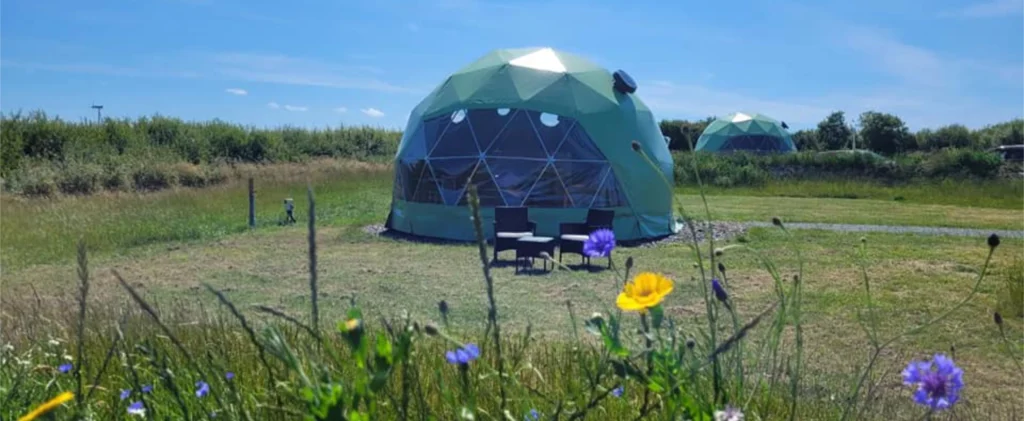
In the luxury glamping market, sustainability is no longer a “nice to have” – it’s an expectation. Guests are actively choosing eco-conscious destinations and operators look for structures that protect both the environment and their long-term investment. At TruDomes, we engineer sustainability into the very foundation of every structure rather than adding it as an afterthought.
Redefining Sustainability in Luxury Hospitality
Many people misunderstand sustainability in glamping accommodation as a collection of individual features. In reality, the full lifecycle of a structure determines its sustainability – from installation through to long-term use.
Key sustainability factors include:
- Structural lifespan and durability
- Environmental impact during installation
- Energy efficiency throughout operation
- Adaptability over years of continuous guest use
A well-engineered dome built for longevity consistently outperforms temporary or disposable alternatives, particularly in demanding outdoor environments. Longevity benefits the planet and plays a crucial role in delivering strong return on investment.
Materials Matter: Build Quality is a Sustainability Choice
Every glamping operator makes one of their most important sustainability decisions before installation begins: choosing the right materials. Lower-grade structures often require frequent maintenance, membrane replacements or costly structural upgrades within just a few years. These issues increase waste, generate repeated transport emissions, disrupt operations and drive up costs.
That’s why TruDomes prioritises high engineering standards from day one. We manufacture our British-made domes using architectural-grade membranes and corrosion-resistant aluminium frames. These materials withstand year-round use in real hospitality environments. As a result, operators experience fewer replacements, reduced waste and structures that maintain their performance and appearance over time.
Lightweight Dome Structures & Reduced Environmental Impact
Luxury does not need to come at the expense of the landscape. Lightweight geodesic dome structures offer a fundamentally different approach to traditional construction. Our engineered domes require less groundwork, which allows faster installation and minimises disruption to the natural terrain. The lightweight design also reduces transport emissions compared with conventional builds, helping developers protect sensitive environments while delivering premium guest accommodation.
Our domes also reduce environmental impact during installation. Because TruDomes structures are lightweight, they require less groundwork and cause less disruption to the natural landscape. Faster installation and lighter transport loads also help reduce emissions compared with traditional building methods.
This allows developers to protect sensitive environments while still creating high-quality guest accommodation. Luxury hospitality does not need to damage the landscape. For operators committed to preserving the beauty of their location, this approach offers a responsible and future-ready solution.
Energy Efficiency for Year-Round Comfort
Sustainability does not end once the dome is installed. Operational efficiency plays a critical role in both the environmental footprint and profitability of any glamping resort. Well-insulated, energy-efficient structures reduce heating and cooling demands, lower operating costs and enhance guest comfort across all seasons. TruDomes are designed to integrate seamlessly with renewable energy solutions, allowing operators to reduce carbon output without compromising luxury standards.
Designed for the Long Term
At TruDomes, we design with decades in mind. By focusing on durability, performance and adaptability, we help our clients avoid the costly cycle of repairs and replacements that temporary solutions often create.
For us, sustainability goes beyond making claims – it reflects responsibility. We build every structure to last, supporting long-term hospitality success while respecting the environment it inhabits. Sustainability is not a feature. It forms the foundation of everything we do.